Safety · Posted · Updated · By the Elevate team
IV infusion side effects: what's normal and what isn't
The short answer Most IV side effects are mild and short-lived: a little redness, swelling or tenderness where the IV went in, a cool feeling as the fluid runs, or a metallic taste. Allergic reactions are rare but serious. Tell your nurse straight away if anything feels off, and call 911 for trouble breathing, chest pain or swelling of the face or throat.

If you're thinking about an IV, for fluids, vitamins or anything else, it's natural to wonder about side effects. Most are mild and pass on their own. Knowing what's normal, and what isn't, helps you relax during your drip and know when to speak up.
What is IV infusion therapy?
An IV (intravenous) infusion puts fluids, vitamins, minerals or medicines straight into a vein through a small, thin tube. It skips your stomach and digestion. Hospitals use IVs for fluids and for medicines like chemotherapy. A mobile IV visit like ours is fluids, vitamins and minerals, plus anything you add from our add-on menu, given by a registered nurse at your home, office or hotel.
What are the common side effects of an IV?
Most people do fine with an IV. Some notice a few small things, either where the IV goes in or through the body. Knowing them helps you tell a normal reaction from one that needs attention.
Where the IV goes in
The spot where the small tube enters your vein often shows something minor that usually settles within hours:
- Redness around the spot, as your body reacts to the tube.
- Mild swelling, from a little fluid in the tissue around it.
- Slight itching while it heals.
- Tenderness when you touch it, which fades as the spot heals.
Through the body
Some feelings come from what's in the bag as it travels through your bloodstream:
- A cool feeling or a chill. Why do IV fluids make you cold? Room-temperature fluid is entering a warmer body. A blanket helps.
- A metallic taste in your mouth, especially with drips that contain vitamins and minerals such as zinc or magnesium.
- Feeling a little tired or drowsy afterwards, which some people notice for a short while.
What does an allergic reaction to an IV look like?
Allergic reactions are rarer, and they're the side effect to take most seriously. Your immune system can mistake something in the bag for a threat and react, from mildly to severely.
Mild
Usually on the skin: hives, itching all over, or a rash that spreads. Some people feel warm or flushed in the face and chest. Mild reactions are often settled with an antihistamine. Tell your nurse as soon as you notice any of it.
Severe
Rare, but an emergency: trouble breathing, a tight chest, a swollen throat, a racing heart, feeling faint or passing out. Call 911. Your nurse watches you the whole time your drip runs so any reaction is spotted right away.
What causes IV side effects?
Three things matter most: what's in the bag, how fast it goes in, and the person getting it.
What's in the bag
Different ingredients can cause different reactions. Hospital medicines like chemotherapy are known for causing nausea, fever or chills, and some antibody treatments can cause reactions of their own. Even a vitamin drip can bring on symptoms if it goes in too fast or at a strength your body doesn't handle well.
How fast it goes in
The speed of the drip matters. Fluid that goes in too fast can cause a headache, dizziness or trouble breathing. Your nurse sets the speed for you, for what's in the bag and for how you're doing, and can slow it down at any point.
You
Your own health plays a big part. People with allergies are more likely to react to something in a drip. A weak immune system, an autoimmune condition, being very dehydrated, or liver or kidney problems all change how your body handles an IV.
How can you lower the risk of side effects?
You and your nurse both have a part to play.
Tell your nurse everything
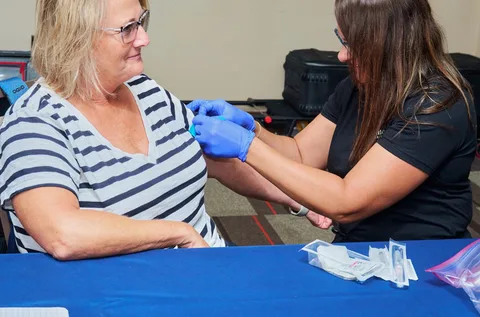
Before your drip, your nurse goes over your health history and checks your vitals. Mention every medicine you take, including over-the-counter ones and supplements, since some can interact with what's in a drip. Share any allergies, to medicines, foods or anything else, and any past reactions. Tell your nurse about long-term conditions, recent illnesses and how you feel today. Your nurse may advise against an IV, or change what goes in it.
Come prepared
- Drink some water beforehand. It makes your veins easier to find.
- Eat something light. It helps keep nausea away and your blood sugar steady.
- Wear something comfortable with sleeves that roll up easily.
Choose trained people
Training makes a big difference. A trained nurse knows how to place an IV properly, what to watch for during your drip, and what to do if something goes wrong. Every EleVate IV is given by a registered nurse, at your home, office or wherever you are.
What should you do if side effects happen?
During your drip
Tell your nurse straight away if you notice anything unusual, even something small like itching, a sudden chill or feeling drowsy. Your nurse can slow the drip, stop it, or take other steps. Most reactions settle quickly once they're dealt with.
After your drip
Keep an eye on the spot where the IV went in for the next few hours. Some tenderness is normal. If redness, warmth, swelling or pain gets worse, or you see a red line along the vein, get it checked by a doctor. Allergic reactions can sometimes show up hours later. If you get a fever, a cough that won't go away or trouble breathing after an IV, call your doctor.
In an emergency
Call 911 for chest pain, trouble breathing, a racing heart, a bad rash with swelling, or a fever with signs of infection where the IV went in. Serious problems are rare, but acting fast on these signs matters.
Are some people more likely to have side effects?
Yes. Your health and history can raise your risk.
- People in cancer treatment. Cancer medicines are strong, and chemotherapy side effects can build up over repeated treatments. Read our page on support during cancer care: we only give an IV during cancer treatment with your own doctor's OK.
- People with a weak immune system, who can react in ways that are harder to predict.
- Pregnant women, since some ingredients can affect both mother and baby. See our page on pregnancy hydration: again, only with your own doctor's OK.
- Older adults, whose bodies often process things more slowly.
- People with allergies, who need to make sure nothing in their drip is something they react to.
How is a trained IV nurse different from an unregulated service?
Who gives your IV matters for how safe it is and how well any side effect is handled.
Registered nurses are trained in IV technique, keeping everything sterile and handling emergencies. They know how to choose a good vein, place the tube properly and set the right speed for what's in the bag. That means less bruising, less risk of infection, and the right amount going in.
A professional service uses sterile equipment and stores everything properly. If a reaction happens, a trained nurse spots it right away and knows what to do, from slowing the drip to stopping it.
With a Mobile IV Hydration Therapy: What It Is and How It Works visit, you get the drip at home without giving up any of that. Your nurse brings everything needed and stays with you the whole time.
What about getting IVs regularly?
If you get IVs often, for health reasons or for wellness, a few things are worth knowing.
Many IVs in the same spot can wear on a vein over time, causing scarring or making it harder to find. Using a different spot each time, and leaving enough time between drips, gives each vein time to heal. If you're on a regular schedule, ask your own doctor about timing.
Regular blood work can catch any imbalance from repeated vitamin or mineral drips. IV vitamins are generally considered safe, but too much of some vitamins can build up in the body over time. A check now and then keeps what you're getting right for you.
Seeing the same team each time helps too. They learn how you respond and can suggest changes to what goes in your drip, how fast it runs or how often you come.
The bottom line
Most IV side effects are mild and short-lived, and knowing what's normal makes it easier to spot the rare reaction that isn't. The keys are a trained nurse, telling your nurse everything, and paying attention to how you feel during and after. More on what goes into a drip in Myers' Cocktail: What's in It and Who It's For.
Questions before you book? Call or text