Hydration · Posted · Updated · By the Elevate team
Chronic dehydration symptoms most people ignore
The short answer Chronic dehydration builds slowly, so its signs are easy to blame on stress or a bad night's sleep: tiredness that won't lift, brain fog, frequent headaches, dry skin and lips, constipation, and dark yellow urine. If several sound familiar, you may be drinking less than your body uses, day after day.

You drink water every day, so you probably think you're hydrated. But plenty of people are low on fluid most of the time without knowing it. Chronic dehydration isn't the thirst you feel after a workout. It builds over days and weeks, and its signs are easy to put down to stress, getting older or just feeling off.
Here's what to watch for, and what to do when water alone isn't enough.
What is chronic dehydration?
Acute dehydration hits fast: you sweat heavily, feel dizzy, and know something's wrong. Chronic dehydration is quieter. It happens when your body loses a little more fluid than it takes in, day after day. Over time, you run below your best, and the effects build until they're hard to ignore.
How much water do you actually need?
A common guideline is about 8 cups (64 oz) of water a day, but needs vary a lot. Heat, activity, illness and pregnancy all raise how much you need. If you're active or outside in warm weather, you likely need more than you think.
The chronic dehydration symptoms people overlook
These are the signs most often brushed off as something else. If several sound familiar, hydration may be part of it.
Tiredness that won't go away
Feeling tired all the time is one of the most overlooked signs. When you're low on fluid, your blood volume drops and your heart works harder to move oxygen around your body. The result can be tiredness that lingers even after a full night's sleep. If you need coffee to get through every afternoon, it's worth looking at how much you drink.
Brain fog, poor focus and mood swings
Your brain is about 75% water. Even losing 1 to 2% of your body's fluid can affect concentration, memory and mood. People often call it brain fog: that frustrating feeling of not being able to think clearly. Irritability and anxiety can come with it.
Frequent headaches
Recurring headaches are one of the most common signs. Being low on fluid is a well-known headache trigger, so if you get regular headaches without a clear cause, hydration is a good first thing to look at. See our page on migraine & headache too.
Dry skin, lips and eyes
Dry or flaky skin, chapped lips and irritated eyes can all mean your body is short on fluid. Dehydrated skin also loses some of its stretch and bounce.
Digestion and constipation
Your gut relies on water to move food along. When you're chronically low, everything slows down: constipation, bloating and sluggish digestion are common, and most people blame them on diet alone.
Other signs to watch for
- Dark yellow or amber urine (urine color is one of the easiest checks)
- Muscle cramps or weakness
- Dizziness or feeling lightheaded when you stand up
- Strong-smelling urine
- Peeing less often, fewer than four times a day
- A dry mouth all day long
Who's most at risk?
Anyone can become chronically dehydrated, but some people are more likely to:
- Athletes, and people with active or outdoor jobs who sweat a lot
- Pregnant or breastfeeding women, who need more fluid
- Older adults, whose sense of thirst fades with age
- People getting over an illness, food poisoning or the flu
- Anyone with nausea, vomiting or diarrhea
- Anyone in hot weather or outside for long stretches
If any of these is you, drinking ahead of thirst, not just when you're thirsty, makes a difference.
Why water alone isn't always enough
Here's something many people don't realize: when you're well behind on fluid, simply drinking more water may not catch you up quickly.
The role of electrolytes
Staying hydrated takes more than water. It takes electrolytes: minerals like sodium, potassium and magnesium that help your body hold on to fluid and keep it in balance. For some people, drinking a lot of plain water quickly when they're very dehydrated can bring on nausea.
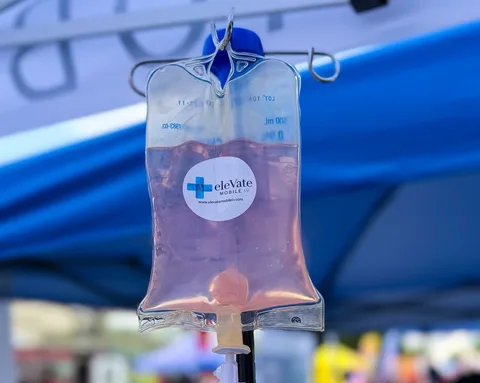
How an IV gets fluid in
An IV skips your stomach and gut. A sterile fluid, with electrolytes and vitamins if you want them, goes straight into a vein. That's why people book one when they're far behind, or when they can't keep enough down. It's not a replacement for drinking enough every day. More in IV Hydration vs. Drinking Water.
IV hydration that comes to you
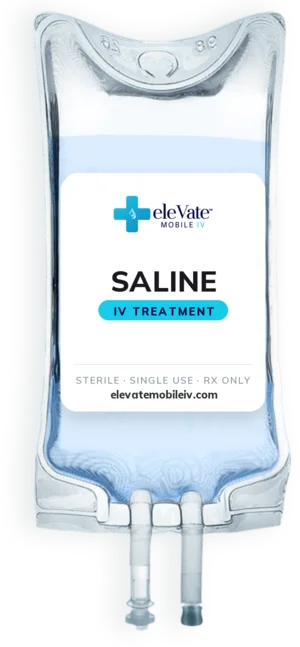
For plain fluids, our pick is The Saline: Normal saline, with add-ons if you want them. Magnesium and other add-ons from our menu can go in the same bag.
A registered nurse comes to your home, hotel, office or event, goes over your health history and checks your vitals first, and may advise against an IV. No waiting room, and no driving when you feel terrible. We come to you in Southern West Virginia, Morgantown, Wheeling and Pittsburgh. Some of the towns we visit: Kanawha Valley, Greater Charleston, Morgantown, Putnam County and Beckley. More in our page on dehydration.
When to see a doctor
Over time, not drinking enough is linked with kidney stones and urinary tract infections, and it makes heat illness more likely. It's worth taking seriously. If the signs don't improve when you drink more, see your doctor. Get help right away for confusion, fainting, a racing heart, or not peeing for many hours.
Questions about chronic dehydration
What are the first signs of chronic dehydration?
Tiredness that won't lift, recurring headaches, dark or strong-smelling urine, trouble concentrating, and dry skin or mouth. Many people put these down to stress or poor sleep first.
Can you be dehydrated even if you drink water every day?
Yes. If what you drink doesn't keep up with what you lose, you can still fall behind, especially in hot weather, when you're active, or when you're sick. Low electrolytes make it harder for your body to hold on to the water you do drink.
Can an IV help with chronic dehydration?
An IV puts fluid and electrolytes straight into a vein, so it can catch you up when you're well behind. Your nurse checks your health first and may advise against it. For the long run, it's what you drink every day that counts. See Signs You're More Dehydrated Than You Think.
What happens if chronic dehydration goes on?
Over time it's linked with kidney stones, urinary tract infections and a higher chance of heat illness. If you think you're often dehydrated, talk to your doctor.
How is chronic dehydration different from acute dehydration?
Acute dehydration comes on suddenly, from one event like a hard workout or a stomach bug. Chronic dehydration builds slowly when you drink less than your body needs over days or weeks, often without clear warning signs until they add up.
Running behind on fluids? Every day, 8 AM to 8 PM, in Southern West Virginia, Morgantown, Wheeling and Pittsburgh.