Hydration · Posted · Updated · By the Elevate team
10 signs you're more dehydrated than you think
The short answer Thirst is a late signal. Before it, dehydration often shows up as a headache you can't shake, an afternoon energy crash, brain fog, dark yellow urine, dry lips and skin, cramps, dizziness when you stand, a racing heart, constipation or a short temper.
You drank water today. Maybe a full glass with your morning coffee. So you're fine, right? Not necessarily. Plenty of adults are mildly dehydrated without ever realizing it.
Dehydration rarely looks dramatic. More often it's a headache, a slump in the afternoon or a foggy head, and the signs are easy to blame on something else. Here are the ones people miss most, why water alone sometimes isn't enough, and how an IV fits in.
Why dehydration is more common than you think
Life gets busy, and drinking enough water drops to the bottom of the list. Add caffeine, alcohol, summer heat or a bout of illness, and your body can lose fluid faster than you put it back.
The tricky part: thirst is a late signal. By the time you feel thirsty, you may already have lost 1 to 2% of your body's fluid, enough to change how you feel. You don't have to be an athlete to get dehydrated. You just have to be busy.
10 signs of dehydration you might be missing
1. Headaches that keep coming back
If you're reaching for pain relievers more than once a week, dehydration could be part of it. Being low on fluid is a common headache trigger, and these are often mistaken for tension or stress headaches. See our page on migraine & headache too.
2. Tiredness and low energy
Sluggish even after a full night's sleep? Dehydration lowers your blood volume, so your heart has to work harder to move oxygen and nutrients around your body. That afternoon slump you keep pushing through may have more to do with your water than your sleep.
3. Brain fog and trouble concentrating
Your brain is about 75% water. Even mild fluid loss can slow your thinking, dull your memory and make it harder to focus. If you feel scattered or keep forgetting things, look at how much you're drinking.
4. Dark yellow or strong-smelling urine
One of the most reliable signs, and one most people ignore. Pale yellow usually means you're well hydrated. Dark yellow or amber means your body is holding on to fluid. A strong smell is a louder warning.
5. Dry mouth, lips or skin
Less saliva, chapped lips and dry or flaky skin are classic signs. A simple test: pinch the skin on the back of your hand and let go. Hydrated skin snaps back quickly. If it stays pinched or settles slowly, called "skin tenting", that's a common sign of dehydration.
6. Muscle cramps or weakness
Hydration isn't only about water; it's about electrolytes too. Sodium, potassium and magnesium all matter for how your muscles work. When they drop with fluid loss, muscles can cramp, twitch or feel weak, especially after exercise, time in the heat, or vomiting and diarrhea.
7. Dizziness or feeling lightheaded
Less fluid means lower blood pressure, and less blood flow to your brain. That shows up as dizziness, especially when you stand up quickly. If it happens to you often, hydration is a sensible first thing to look at.
8. A racing or fluttering heart
When your blood volume drops, your heart beats faster to make up for it. You can feel it as a racing, fluttering or uneven heartbeat, even at rest. Take it seriously: if it doesn't settle, get it checked.
9. Constipation
Your colon needs water to keep things moving. When you're low on fluid, your body pulls water from your stool, which makes it harder to pass. If constipation keeps coming back, more fluid and electrolytes may help more than another supplement.
10. Mood changes and irritability
Even mild dehydration is linked with changes in mood and how you handle stress. Feeling unusually anxious, irritable or flat? Before blaming a bad day, think about how much you've had to drink.

Mild, moderate and severe: know the difference
- Mild (1 to 2% fluid loss): thirst, a dry mouth, slightly dark urine, a little tiredness.
- Moderate (3 to 5%): headache, dizziness, peeing less, real tiredness and brain fog.
- Severe (6% or more): a racing heart, confusion, fainting, sunken eyes. This needs medical help right away.
If you or someone near you shows signs of severe dehydration, call 911 or go to an emergency room now. An IV at home is not for emergencies.
Why water alone may not be enough
For mild dehydration, water and rest usually do it. But after a night of drinking, a stomach bug, a hard workout or a day in the heat, you lose electrolytes and vitamins along with fluid, and plain water doesn't replace those. Everything you drink also has to go through your stomach and gut first, which takes time and is hard when you feel sick. More in IV Hydration vs. Drinking Water.
How IV hydration works
An IV puts fluid straight into a vein, with no waiting on your stomach and no trying to keep water down when you're nauseous. A typical drip for dehydration holds:
- Saline, sterile salt water, to bring your fluid back up
- Electrolytes like magnesium, for your muscles and nerves
- B vitamins and vitamin C, if you want them
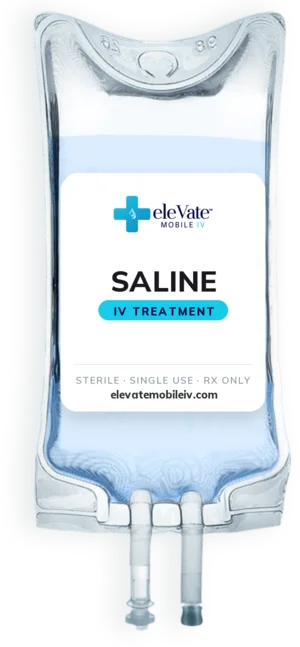
For plain fluids, our pick is The Saline: Normal saline, with add-ons if you want them. If you want vitamins and minerals in it, the Myers' Cocktail is Vitamin C, Glutathione, Zinc, Magnesium, B Complex, B12.
Who books IV hydration?
- People getting over an illness, food poisoning or a hangover
- athletic recovery after hard training or a game
- Anyone dealing with Chronic Dehydration Symptoms Most People Ignore
- People spending long days in the heat
- Pregnant women with nausea, only with their own doctor's OK: see pregnancy hydration
- Busy people running on coffee and not enough water
IV hydration that comes to you
A registered nurse comes to your home, hotel, office or wherever you need us. No waiting room, no driving when you already feel awful. Your nurse goes over your health history and checks your vitals first, and may advise against an IV. We come to you in Southern West Virginia, Morgantown, Wheeling and Pittsburgh. Some of the towns we visit: Greater Charleston, Morgantown, Kanawha Valley, Beckley and Fayetteville.
Questions about dehydration
What are the most common signs of dehydration in adults?
Headaches, tiredness, dark yellow urine, brain fog, a dry mouth, muscle cramps, dizziness and mood changes. Many adults are mildly dehydrated through the day without noticing.
What's the fastest way to rehydrate?
For mild dehydration, drink water or an electrolyte drink. When you can't keep fluids down, or you're far behind, an IV gets fluid in without waiting on your stomach. For signs of severe dehydration, call 911.
Can dehydration cause headaches and tiredness?
Yes. Being low on fluid is a common headache trigger, and low blood volume makes your heart work harder, which can leave you tired. Both are among the most common signs.
What is IV hydration?
A sterile fluid, with electrolytes and vitamins if you want them, given through a small IV in your arm. It skips your stomach and gut. Ours is given by a registered nurse, and the drip runs for about 30 to 45 minutes.
How often do people get IV hydration?
It varies. Some book a drip now and then for general wellness; others only after an illness, a workout, travel or a night out. Ask your nurse.
Is mobile IV hydration safe?
Every visit starts with a health check by a registered nurse, and every IV uses sterile equipment. More in Understanding IV Infusion Side Effects.
Do you come to my area?
We come to you in Southern West Virginia, Morgantown, Wheeling and Pittsburgh. Check every place we go, or call or text
Feeling the signs? Every day, 8 AM to 8 PM, in Southern West Virginia, Morgantown, Wheeling and Pittsburgh.