Nausea & stomach · Posted · Updated · By the Elevate team
IV fluids for the stomach flu: what to know
The short answer The stomach flu drains fluid through vomiting and diarrhea, and when you can't keep even sips down, drinking can't catch you up. An IV puts fluid and electrolytes straight into a vein, skipping your upset stomach. It doesn't cure the bug, which usually runs its course in 24 to 72 hours, but it gets fluid in while you ride it out.
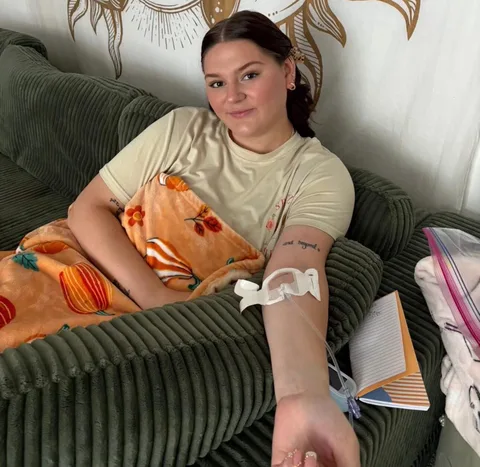
When the stomach flu hits, it brings waves of nausea, vomiting and diarrhea that leave you drained. IV fluids are one way through it: fluid, electrolytes and vitamins go straight into your bloodstream, without asking anything of your stomach.
What is the stomach flu?
The stomach flu, or gastroenteritis (many people call it a stomach virus), is inflammation of the stomach and intestines caused by a virus or bacteria. Unlike the seasonal flu, which affects your breathing, it goes after your digestive tract. It can last anywhere from 24 hours to several days.
Common symptoms:
- Nausea and vomiting that keep coming back
- Frequent diarrhea
- Stomach pain and cramping
- A low fever
- Body aches
Together they pull fluid and electrolytes out of your body fast, which is why dehydration is one of the biggest concerns. The stomach flu is also very contagious: it spreads through contact with someone who has it, or with surfaces they've touched.
Will IV fluids help with the stomach flu?
When your stomach and intestines are inflamed, they don't absorb liquids well. Every sip might come right back up, or pass through too quickly to do much good.
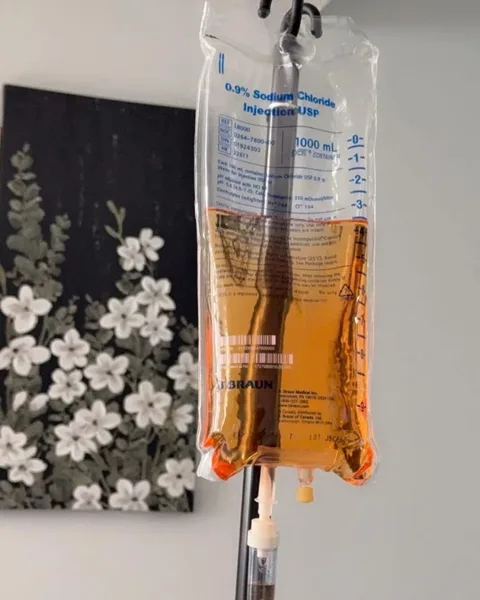
An IV puts fluid into a vein through a small, thin tube. It skips your upset stomach entirely, so you get fluid replacement without setting off more nausea or vomiting. The base is normal saline: sterile salt water, made of sodium and chloride, two of the electrolytes you lose through vomiting and diarrhea. More in IV Hydration vs. Drinking Water.
What goes in the bag?
Fluid is the foundation. Your nurse can add vitamins and medicine to it.
Our pick: the Bounce Back
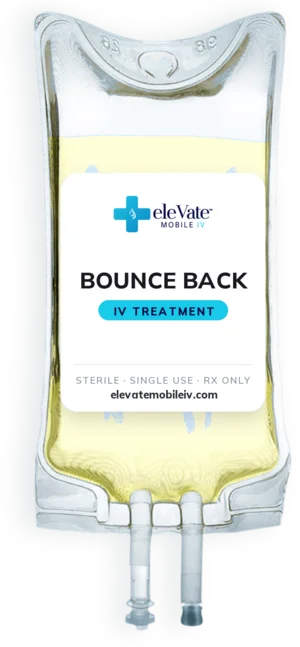
For the stomach flu, our nurses' pick is the Bounce Back: Anti-nausea, pain relief, B12, B Complex. The anti-nausea and pain relief medicines in it are given after your nurse's assessment. B vitamins matter more than usual when you haven't been able to eat for a day or two.
Anti-nausea
Anti-nausea medicine, given after your nurse's assessment.
Pain relief
Pain relief medicine, given after your nurse's assessment.
B12
A B vitamin.
B Complex
The family of B vitamins, together.
Zofran (an anti-nausea medicine), magnesium and other add-ons from our menu can go in the same bag.
For when you're run down
If you're past the worst of the nausea but wiped out, some people book the Under the Weather instead: Vitamin C, Glutathione, B Complex, B12, Zinc, Magnesium. Vitamin C is a vitamin and antioxidant; B Complex is the family of B vitamins your body uses to turn food into energy.
Signs of severe dehydration
Severe dehydration is one of the most dangerous parts of the stomach flu. Watch for:
- Dark yellow or amber urine
- Dizziness or feeling lightheaded, as your blood pressure drops
- Skin that loses its stretch
- Confusion, a racing heart or extreme tiredness
Confusion, fainting or a racing heart need medical help right away: call 911 or go to an emergency room. An at-home IV is not emergency care.
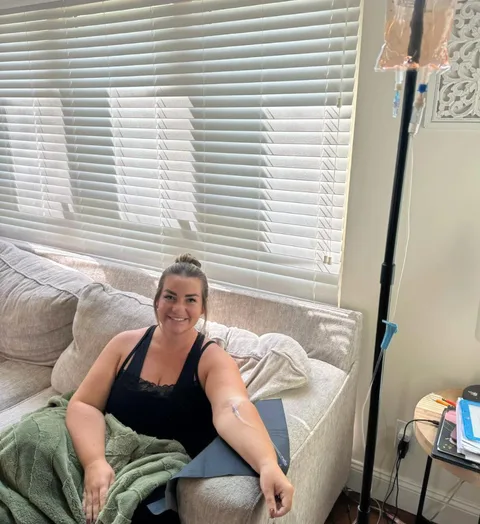
Before it gets that far, when you can't keep down even small sips of water, a nurse can come to you, check how you're doing and start fluids at home. That matters when you feel too weak or sick to travel. More on the signs in Signs You're More Dehydrated Than You Think.
How long does it last?
The stomach flu usually runs its course in 24 to 72 hours, with or without an IV. Your body needs time to clear the virus or bacteria. An IV doesn't shorten the illness. What it does is get fluid and electrolytes into you while you can't drink enough, so you're not getting more and more dehydrated as it runs its course.
Who should consider IV fluids for the stomach flu?
- People who've been vomiting for more than 12 hours. Dehydration builds fast.
- Anyone who can't keep down even small sips of water or ice chips.
- Athletes and active people, who can be hit harder by low electrolytes.
If you have a long-term health condition, take extra care. People with diabetes should keep a close eye on their blood sugar, because dehydration affects it. If you have kidney disease or a heart condition, talk to your own doctor first. If you're pregnant, we only give an IV with your doctor's OK.

What to expect during your visit
Your nurse starts with a health check: your symptoms, your medical history and the medicines you take, then your blood pressure, heart rate and temperature. Your nurse may change what goes in your drip, or advise against an IV.
Then your nurse picks a vein, usually in your arm or hand, and cleans the skin. You'll feel a quick pinch as the small tube goes in, a lot like having blood drawn. Once it's taped in place, the discomfort fades. The bag hangs above you and the fluid flows in steadily.
The drip runs for about 30 to 45 minutes. Rest, read, watch TV or work on your laptop if you feel up to it. Your nurse stays with you, checking how you feel and watching for any reaction. When it's done, your nurse takes the IV out and puts a small bandage on. More in Understanding IV Infusion Side Effects.
Looking after yourself afterwards
An IV works best alongside rest and going slowly with food and drink. Your stomach and intestines still need time to settle.
Start with clear liquids
Once the nausea eases, take small sips of water, clear broth or an electrolyte drink. Skip dairy, caffeine, alcohol and fatty or spicy food for at least 24 hours after you start feeling better.
Then bland food
As your appetite comes back, try easy foods. The BRAT diet (bananas, rice, applesauce and toast) is gentle on your stomach. Add plain crackers, boiled potatoes or plain cooked chicken as you improve.
Rest
Even if you feel much better after a drip, your body is still fighting the infection, and that takes energy. Sleep, and skip hard exercise for a few days.
The drip comes to you
The last thing you want with the stomach flu is a car ride and a waiting room. A registered nurse comes to your home, hotel or office instead. We come to you in Southern West Virginia, Morgantown, Wheeling and Pittsburgh. Some of the towns we visit: Huntington, Greater Charleston, Morgantown and Pittsburgh. See our pages on nausea and food poisoning too.
Stuck on the couch with a stomach bug? Every day, 8 AM to 8 PM, in Southern West Virginia, Morgantown, Wheeling and Pittsburgh.